
Why we work the way we work.
Creative Broadcast Agency was built on a simple idea. Production professionals should build the tools they use. No vendor handoffs, no excuses when something breaks. We own the pipeline end to end, and we build the infrastructure we wish existed when we were TDs, producers, and engineers ourselves.
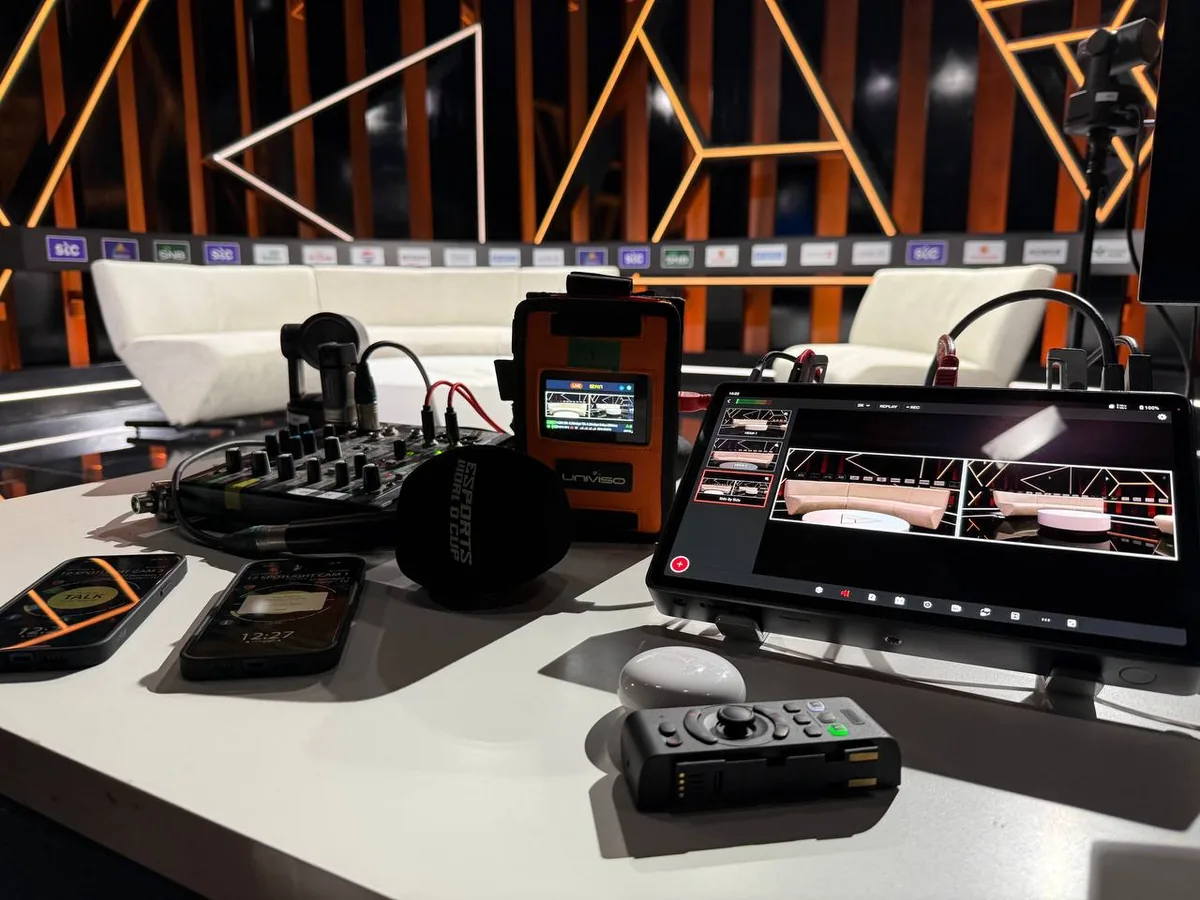
Built
Dubai
Engineers
2
What we deliver on every engagement
-
We own the entire signal path. From camera to encoder to CDN to viewer. No finger-pointing between vendors.
-
We build the tools. When an off-the-shelf product falls short, we build what we need ourselves.
-
We hire broadcast engineers, not AV generalists. Most of our team has satellite broadcast or TV newsroom experience.
-
We treat data as the product. The stream is the delivery. The audience data is what you actually pay for.
We built CBA because we had been the TD, the producer, the engineer.
The people who run CBA have spent careers in the chair. We have called shows with no rehearsal time. We have watched a producer try to moderate a Q&A from a chat window while the speaker was still talking. We have seen a sponsor\'s logo disappear because a freelance graphics operator never got the run sheet. We have been the person whose job was to catch the failure before the CEO saw it.
CBA was built because we kept meeting the same pattern. A global brand books a live event in the GCC. An agency pulls a team together. Five or six vendors show up. Nobody owns the signal path end to end. When something breaks, everybody points at someone else. The audience sees the failure. The client loses confidence in live as a format.
That pattern is not inevitable. It is the product of a commercial model where production is fragmented, tools are rented, and accountability leaks at every handoff. We built CBA to be the opposite of that model: one team, one owner of the signal path, one point of accountability, one bill.
Three principles that do not move.
Certainty is the floor, not the ceiling. Most vendors compete on features. We compete on the fact that nothing goes wrong. 300 events delivered, zero complete broadcast failures. That is not a marketing claim. It is the operating standard we refuse to drop below, and the reason the United Nations, Google, and COP28 invite us back.
The data is the product. The stream is the delivery mechanism. Clients come to us because they want reach. They stay because they get the data. Every broadcast we produce returns per-attendee engagement ranked hot to cold, questions captured with attendee metadata, watch-time patterns that show which moments landed. The sales team gets a list on Monday. The marketing team gets proof the message worked. The stream is the easiest part of what we deliver.
Momentum belongs to the brand that publishes first. Your competitor is still editing post-event. You already shipped clips during the keynote. We built ClipLive so the same event generates its own content library before the room is clear. This is not a nice-to-have. This is how brands stay relevant in a feed that moves every 24 hours.
Broadcast people, not AV generalists.
Most production companies hire AV generalists: people who can set up cameras, mix audio, and run streaming software. CBA hires broadcast people: directors who came from live sports and news, vision mixers who trained on premier tournaments, replay operators who know the game before they know the console, engineers who built signal chains for regional broadcasters.
The difference shows up in the small moments. When a speaker goes off-script, a broadcast director cuts to the audience and back in a way that feels designed. When a connection drops, a broadcast engineer switches to the redundant path before the audience sees buffering. When a sponsor moment arrives, a broadcast graphics operator triggers the overlay on the beat, not a second late.
These are not configurable with a product catalogue. They are the accumulated instincts of people who have done this hundreds of times under pressure. We hire for that, pay for that, retain for that, and protect the working environment that lets those instincts sharpen.
When a product falls short, we build the one we wish existed.
We do not resell other people\'s software stacks. When a client needs something the market does not offer, we build it. StreamStudio is the production control layer we wanted on our own events and could not buy. ClipLive ships clips during the broadcast because no existing tool could. Our workspace platform replaces a stack of vendor subscriptions with one surface your team actually uses.
Building our own tools is not a competitive advantage for marketing. It is a reliability posture. When we own the tools, we own the debugging. When something breaks at 2am the night before a live, we do not open a support ticket and wait for another company\'s engineer to respond. Our team fixes it because our team wrote it.
This is what "production professionals who build the tools they use" actually means in practice. The tools are not the point. The point is the control it gives us when the event is happening and the audience is watching.
The lines we do not cross.
We will not compete on price. Our rates are mid-market. We do not chase the bottom. If the choice is between winning a contract at a margin that forces us to cut the second camera, lose the redundant encoder, or hire the cheaper freelancer, we walk away. We owe it to the clients already on our calendar to stay at the standard they hired us for.
We will not take on events we cannot guarantee. If the venue has no fibre, no cellular, no satellite path, and a run date we cannot survey in advance, the answer is no. A "yes" we cannot stand behind hurts the client more than the "no" does.
We will not subcontract the parts that matter. Cameras, audio, graphics, streaming, and post run through CBA teams or long-term trusted partners we project-manage directly. A client has one number to call. That number goes to a CBA producer who knows everything about the event.
We will not lead with technology. Clients do not buy SRT, 5G bonding, NDI, or MCR switching. They buy reputation protection, measurable reach, and a recording they can stand behind. Technology is how we deliver those outcomes, not what we sell.
What changes when CBA is in the room.
A production company is hired for one reason: to make the event work. The test of whether we did our job is whether the audience, the sponsors, the speakers, and the executive team left the event with confidence in live as a format. When that confidence is there, brands keep producing events. Marketing teams get budget. Reputation compounds. The next event is better than the last.
When that confidence is not there, live becomes a budget line that gets cut. We have watched companies spend a six-figure budget on an event that went wrong and then cancel live events for two years afterwards. That is the real cost of a failed broadcast, and that is what CBA exists to prevent.
We are production professionals. We build the tools. We hire the people. We take the calls at 2am. We do not apologise for any of it. And when the event is over, the only thing left is the audience data, the clips, the recording, and the client already asking when the next one is.
You might also want to explore
YOUNGO at COP28: the youth constituency's daily broadcast.
We produced the YOUNGO daily broadcast inside COP28. Four languages, four channels, every day for two weeks, fed by stand-up interviews and bonded 5G reporters.
Read the full pieceEsports World Cup: a Technical Manager credit across five arenas.
Esports broadcasting at tournament scale in Riyadh: a Technical Manager credit across five arenas over three months, the benchmark for our esports production scoping.
Read the full pieceIRENA: ministers on air inside three minutes.
The stand-up interview broadcast position at IRENA: ministers on air with a broadcast cut inside three minutes, feeding the live pipeline and same-day packages.
Read the full piece